My Journey: How the Line Learned to Build
This is not a chronological list of roles. It is a record of how my way of seeing problems evolved—how listening became judgment, judgment became structure, structure became product ownership, and product ownership expanded into AI-native building. Each chapter changed the way I work. Together, they explain why I am most useful when the problem matters, the path is unclear, and the system cannot be understood from only one perspective.
Listening for Signal: What Journalism Taught Me About Product
StorytellingSignal DetectionAudience UnderstandingComplexity
Journalism taught me that the first version of a problem is rarely the complete one. Before writing, I had to listen, compare perspectives, test what appeared important, and understand what an audience actually needed to know. That discipline still shapes my product work. Good discovery is not collecting more information. It is distinguishing signal from noise and turning complexity into something people can understand and act on.
Key Insights:
- Listen before defining the problem.
- Separate what is visible from what is consequential.
- Make complexity understandable without making it shallow.
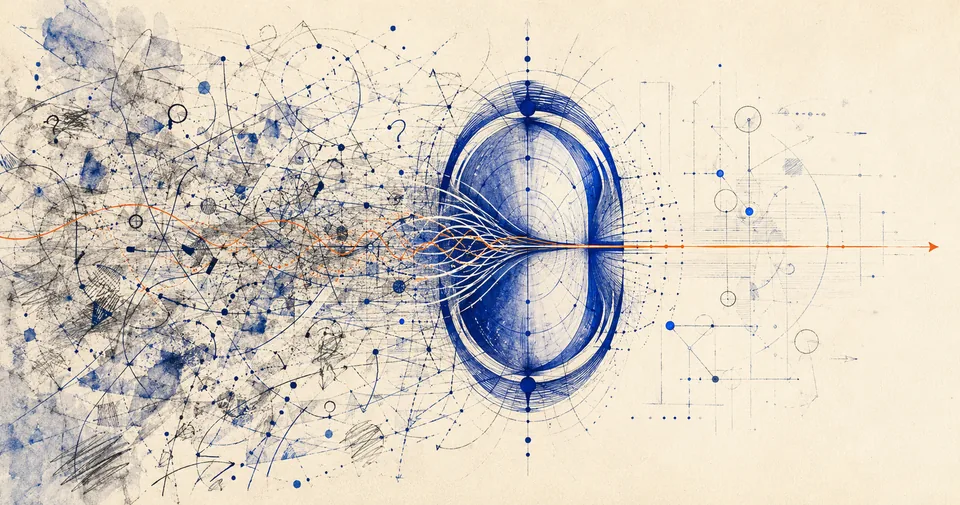
Visual representation of separating signal from noise
Trust Is an Architecture, Not a Promise
FinTechFinancial InfrastructureRegulationSystem Design
Work in post-trade and financial-market infrastructure showed me that trust depends on the design of the system: how records are structured, how ownership is validated, how exceptions are handled, and how decision rights are distributed. Invisible infrastructure carries visible consequences. When records, regulation, operations, and technology do not align, risk travels across the entire system.
Key Insights:
- Trust must be built into the operating model.
- Fragmented information creates operational and systemic risk.
- Regulation, product, data, and implementation cannot be designed separately.
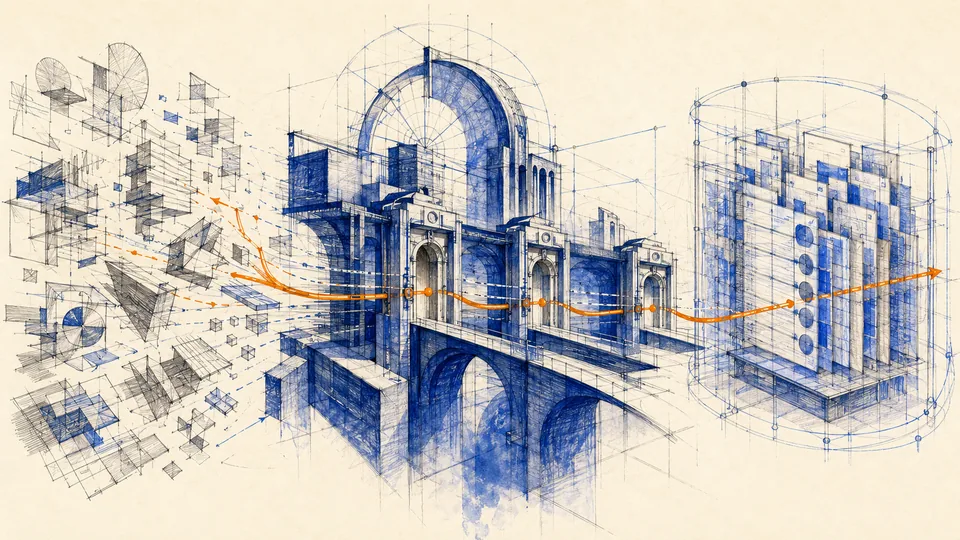
Architecture and system design visualization
Turning Risk into a Product People Can Move Through
Consumer CreditProduct OwnershipRiskOperations
Consumer credit made the meaning of end-to-end ownership concrete. The product connected customer onboarding, affordability, underwriting, pricing, contracts, funding, construction milestones, repayment behavior, servicing, exceptions, and recovery. The work was not about removing risk. It was about making risk visible, turning policy into executable decisions, and creating a path that customers and internal teams could actually move through.
Key Insights:
- A credit product is a connected lifecycle, not a single approval.
- Local decisions create system-wide consequences.
- Speed and risk control can improve together when the operating model is redesigned.
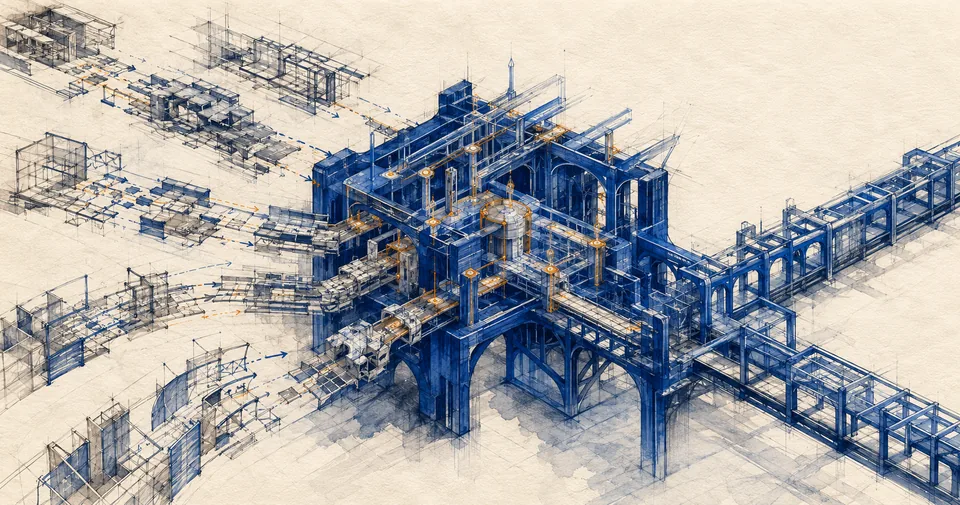
Consumer credit and risk path visualization
When Evidence Redraws the Map
H2LearnProduct DiscoveryPivotStakeholder Alignment
H2Learn began with a broad ecosystem challenge and multiple possible product directions. I translated that ambiguity into product logic, user journeys, data structures, and a working prototype. As stakeholder evidence became clearer, the most valuable direction changed. The product moved toward a simpler, initiative-centered map. The pivot was not a retreat from the original work; it was the result of learning what the system actually needed.
Key Insights:
- A strong product direction must remain challengeable.
- Prototypes are instruments for learning, not proof that the first idea was correct.
- Simplification is valuable when it follows evidence.
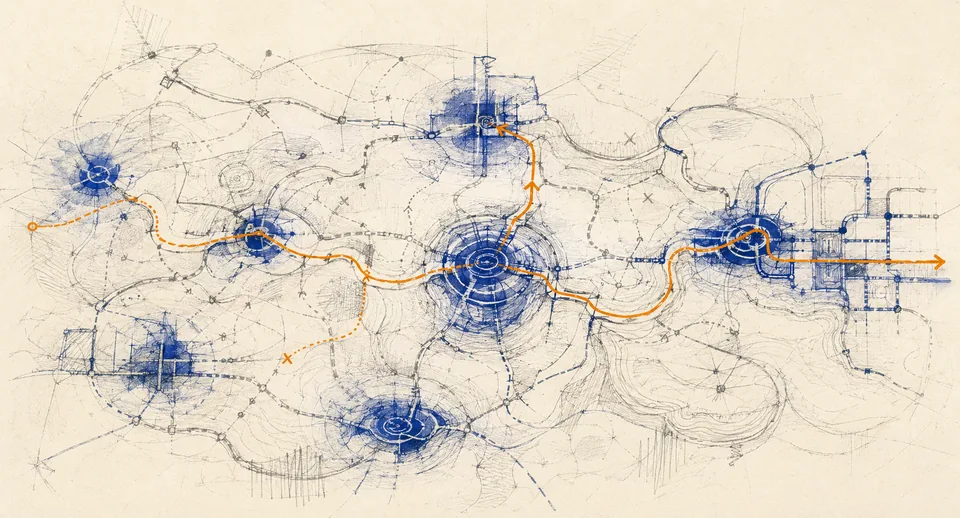
Product discovery and map redrawing
Building with AI, Keeping Judgment Human
AI-Native ProductHuman-in-the-LoopVenture BuildingAccountability
AI is now part of how I investigate, design, prototype, and operate. It allows me to explore alternatives more deeply, connect more information, and move from ambiguity to a working model faster. But leverage is not the same as authority. AI can widen the field of view; it cannot own the consequences of the direction chosen. My work in H2Learn, Airsheet, Gader, and Solofounders is shaped by that boundary.
Key Insights:
- Use AI to increase the depth and speed of exploration.
- Keep evidence and consequential decisions reviewable.
- Design intelligent products around human responsibility.
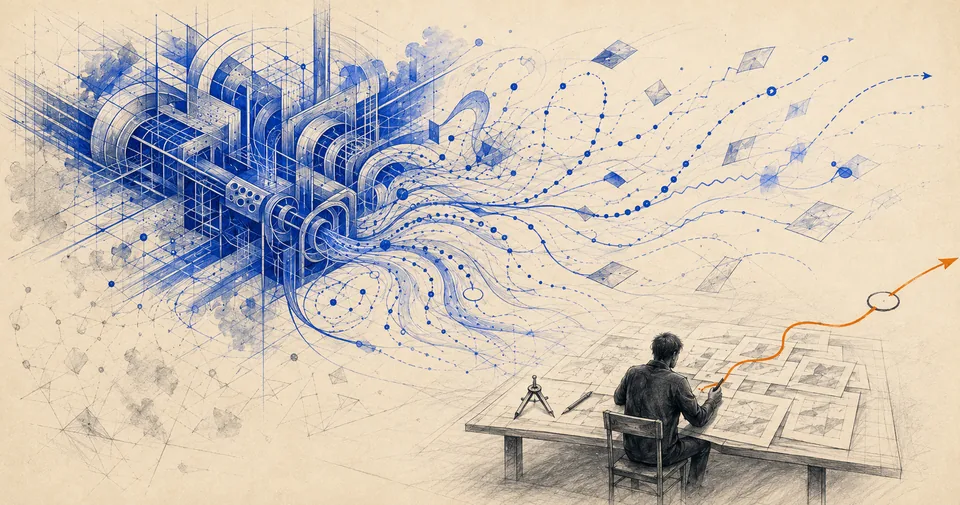
AI integration with human judgment
Working on a problem where the map is incomplete?
Start a Conversation